




Myths & Facts
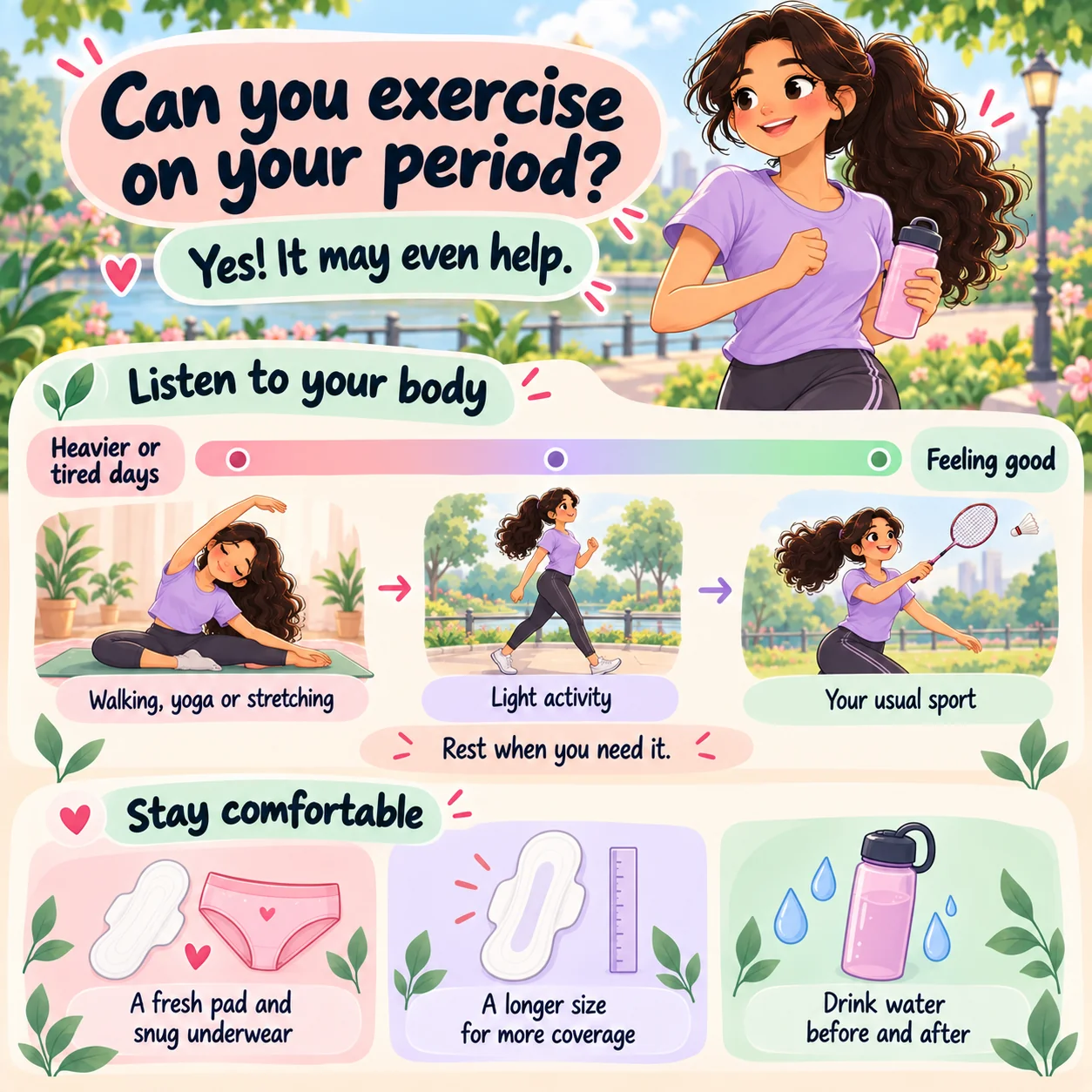
Can you exercise on your period?
Yes — and it may even help. How exercise eases cramps and lifts your mood, what kind of movement suits each day, and how to stay comfortable.
Key takeaways
- Exercising on your period is safe, and many athletes train and compete during theirs.
- Movement releases endorphins, which ease cramps and lift your mood.
- Choose lighter activity on heavy or tired days, and rest when you need to.
- A fresh pad, snug underwear and water keep you comfortable.
1. Exercise is safe
Exercising on your period is completely safe. There is no medical reason to stop being active, and many athletes train and compete on their periods.
In fact, people who exercise regularly often report less period pain.
2. How movement helps
- Eases cramps: exercise releases endorphins, your body’s natural painkillers.
- Lifts your mood and reduces stress, which helps with PMS.
- Improves blood flow, which can relax tight muscles.
- Helps you sleep better.
- Can reduce bloating.
3. Listen to your body
Your energy can change from day to day during your period. Match your activity to how you feel:
- Step 1Heavy or tired days: walking, yoga or gentle stretching
- Step 2Feeling okay: light activity like cycling or dancing
- Step 3Feeling good: your usual sport or workout
- Step 4Rest whenever you need it — it counts too
4. Good activities to try
- Walking, especially outdoors in daylight.
- Yoga and stretching — child’s pose and cat–cow can ease cramps.
- Swimming (with a tampon or menstrual cup, as pads are not for water).
- Cycling or dancing.
- Your usual sport if you feel up to it.
5. Stay comfortable
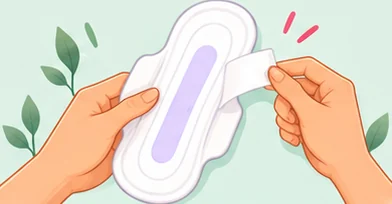
- Put on a fresh pad just before exercising.
- Wear snug underwear and comfortable, close-fitting sportswear so the pad stays in place.
- A longer size can give more coverage during sport.
- Dark-coloured shorts or leggings can give extra peace of mind.
- Drink water before, during and after.
- Change your pad after exercising.
6. When to take it easy
Rest if you feel dizzy, very tired or unwell. If your periods are so heavy or painful that they regularly stop you from being active, or you often feel breathless or exhausted, talk to a doctor — heavy periods can cause low iron, which affects your energy.
7. FAQs
Sources & further reading
This article is general information, not medical advice. For diagnosis or treatment, please speak to a qualified healthcare professional. In an emergency, call 112.