


First Period
What happens when you get your first period?
A simple, friendly guide to your first period: what it is, the signs it may be coming, what it looks and feels like, and when to ask for help.
Key takeaways
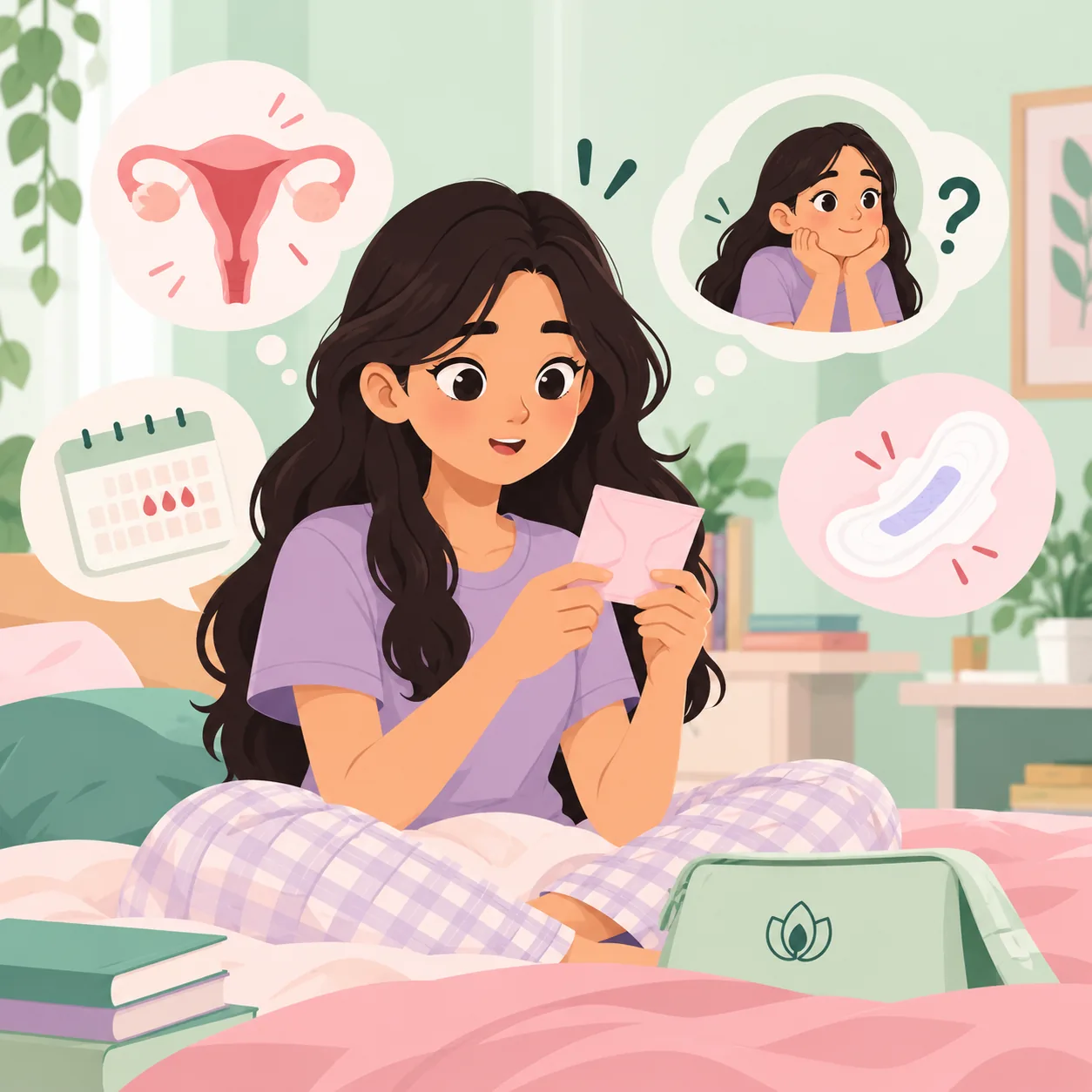
- Your first period is a normal, healthy sign that your body is growing up. Doctors call it menarche.
- Most girls in India get it between about 12 and 14, but anywhere from 8 to 15 can be normal.
- First periods are often light, can be red, pink or brown, and last about 2 to 7 days.
- Periods are often irregular for the first few years. See a doctor if yours hasn’t started by 15.
1. What is a first period?
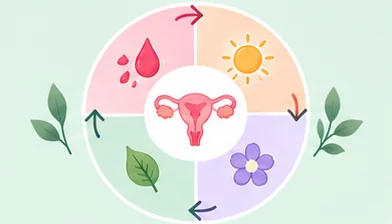
A period is when a little blood, mixed with the soft lining of the uterus (womb), comes out through your vagina. It happens about once a month, and your first one is the start of this monthly pattern, called the menstrual cycle.
Your first period is a sign that your body is now able to support a pregnancy in the future. That doesn’t mean anything has to change in your life right now — it simply means your body is growing up the way it should.
Every woman you know — your mother, aunts, older sisters, teachers — has been through this. It is one of the most normal things in the world.
2. When will it happen?
There is no exact age. Large surveys of Indian women (the National Family Health Survey) find that most girls get their first period at around 13 to 14, and the average age has been slowly getting younger. Many girls start at 11 or 12, and some as early as 8.
Your timing is often similar to your mother’s or older sisters’, so asking them when theirs started can give you a rough idea.
Starting earlier or later than your friends is completely normal. It says nothing about how healthy or grown-up you are.
3. Signs your first period may be coming
Your body usually gives you some hints. You may notice:
- Your breasts started developing about two years ago. This is often the first sign of puberty.
- Hair has started growing under your arms and around your genitals.
- You see white or clear discharge in your underwear. It often appears 6 to 12 months before a first period and is your body’s natural way of keeping the vagina clean.
- You’ve had a growth spurt (you’ve suddenly grown taller).
- You feel mild cramps in your lower tummy, bloating, spots, or mood changes for a few days.
4. What it looks and feels like
A first period is usually light. You might just notice a few spots or a stain on your underwear rather than a lot of blood.
The colour can be bright red, pink or brown. Brown blood is simply older blood that took longer to leave the body, and it is very common at the start and end of a period.
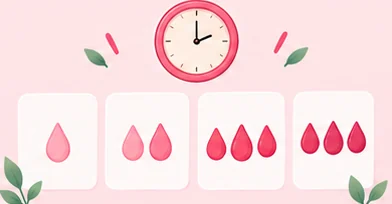
Even a full period is less blood than it looks: on average about 20 to 90 ml, or roughly 1 to 5 tablespoons, spread over several days.
Some girls feel cramps, a dull ache in the lower back, tiredness or tender breasts. Others feel nothing at all. Both are normal.
5. Irregular periods are normal at first
For the first two to three years your periods may come at uneven gaps. You might have one, then nothing for two months, then two close together. This happens because the hormones that control your cycle are still settling into a rhythm.
Doctors say that for teenagers, cycles anywhere from 21 to 45 days apart are normal, and most periods last 2 to 7 days. Over time they usually become more regular.
Start noting the first day of each period in a diary or a tracking app. Over a few months you’ll begin to see your own pattern.
6. What to do when it starts
Don’t panic — you haven’t done anything wrong and nothing is broken. Here’s what to do:
- Step 1Go to the toilet and check your underwear
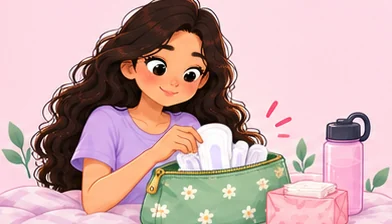
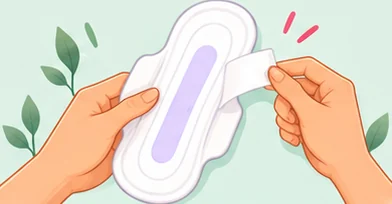
- Step 2Put on a pad (or folded toilet paper for now)
- Step 3Tell someone you trust — a parent, sister, teacher or nurse
- Step 4Note the date: this is day 1 of your cycle
7. When to talk to a doctor
Most first periods need no medical help at all. But do speak to a doctor if:
- You are 15 and have not had a period yet (or 13 with no other signs of puberty, such as breast growth).
- Your bleeding is very heavy — for example, you need to change a pad every 1 to 2 hours.
- A period lasts more than 7 days.
- Pain stops you from going to school or doing your normal activities.
- You feel dizzy, very tired or short of breath during your period.
Talking to a parent, older sister, teacher or school nurse can help. Asking questions about periods is never embarrassing.
8. FAQs
Sources & further reading
- Starting periodsNHS (UK National Health Service)
- Menstruation in girls and adolescents: using the menstrual cycle as a vital signAmerican College of Obstetricians and Gynecologists (ACOG)
- Secular trend in age at menarche among Indian women (NFHS data)Scientific Reports, 2024 (PubMed Central)
- PeriodsNHS (UK National Health Service)
This article is general information, not medical advice. For diagnosis or treatment, please speak to a qualified healthcare professional. In an emergency, call 112.