




Period Care
How to use a sanitary pad correctly
A step-by-step guide to putting on, changing and disposing of a pad comfortably and hygienically — plus tips to avoid leaks and rashes.
Key takeaways
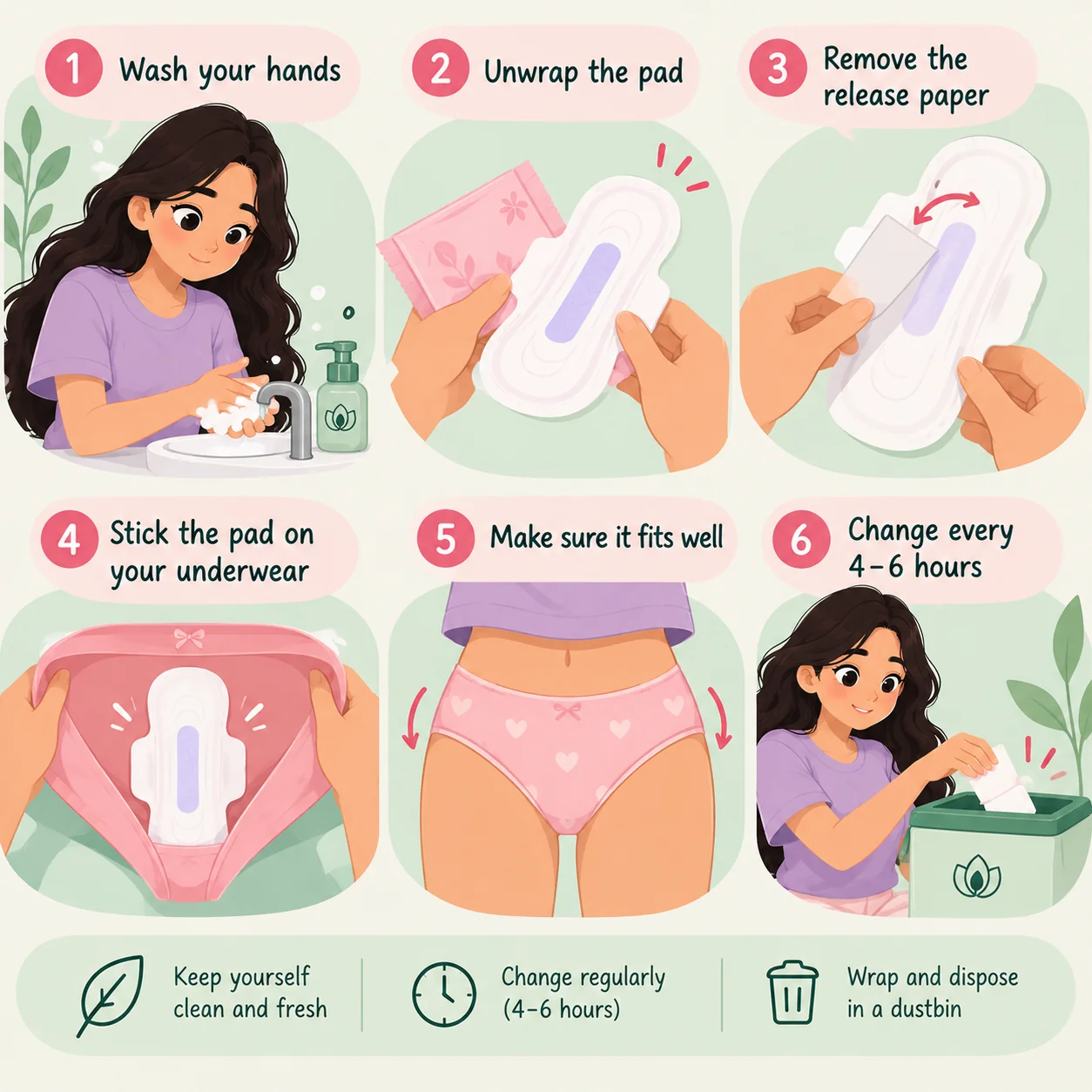
- Wash your hands, stick the pad to the centre of your underwear and fold the wings around.
- Change your pad every 4 to 6 hours, even on light days, and sooner if it feels full.
- Use a longer pad on heavier days and at night for more coverage.
- Wrap used pads and put them in a bin — never flush them.
1. What is a sanitary pad?
A sanitary pad is a soft, absorbent layer that sticks to your underwear and soaks up period blood. Disposable pads are used once and then thrown away. Pads are a simple, safe choice for every age, including your very first period.
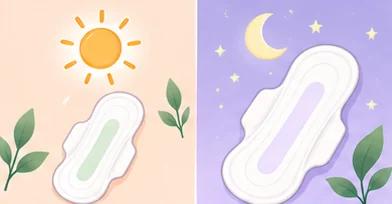
Pads come in different lengths and absorbencies. Shorter ones suit lighter days, longer ones give more coverage for heavier days and nights.
2. Putting on a pad, step by step
Wash your hands first, then:
- Step 1Unwrap the pad and peel off the backing paper
- Step 2Stick it to the centre of your underwear, slightly more to the back if you’re lying down
- Step 3Fold the wings around the sides of your underwear and press
- Step 4Pull up your underwear and check it feels comfortable
3. How often to change
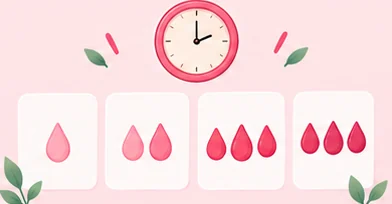
Change your pad every 4 to 6 hours, even on lighter days. UNICEF, which supplies pads to girls around the world, advises using a disposable pad for no more than 4 to 6 hours.
Change sooner if the pad feels full, damp or uncomfortable. On heavy days you may need to change every 2 to 3 hours.
If you have to change every 1 to 2 hours, or need two pads at once, talk to a doctor. Heavy periods are common and can be treated.
4. Pick the right size
Your flow changes over the days of your period, so one size rarely fits every day. Shorter pads suit lighter days; longer pads give more coverage for heavier days and nights. PIAX comes in four lengths, from VERA (240mm) to SEREN (360mm), so you can match each day.
5. Tips to avoid leaks
- Place the pad centrally; move it slightly back for sleeping and slightly forward if you leak at the front.
- Wear snug, well-fitting cotton underwear so the pad stays in place.
- Use a longer pad on heavier days and at night.
- Change before the pad is completely full.
- Keep a spare pad and underwear in your bag.
6. Avoiding rashes and irritation
Wearing a pad for too long, or a damp pad rubbing on skin, can cause redness or chafing. Changing regularly is the best way to prevent it. Wash the outer area with plain water, pat dry, and choose breathable cotton underwear.
If you get a rash that doesn’t go away, itching, or unusual discharge with a strong smell, see a doctor or pharmacist.
7. Removing and disposing of a pad
- Step 1Peel off the used pad and roll it up
- Step 2Wrap it in the new pad’s wrapper or some paper
- Step 3Put it in a covered bin — never flush it
- Step 4Wash your hands
8. FAQs
Sources & further reading
This article is general information, not medical advice. For diagnosis or treatment, please speak to a qualified healthcare professional. In an emergency, call 112.