





Menstrual Cycle
What is the menstrual cycle?
A simple guide to what the menstrual cycle is, how to count it, what a normal cycle looks like, and why tracking it is good for your health.
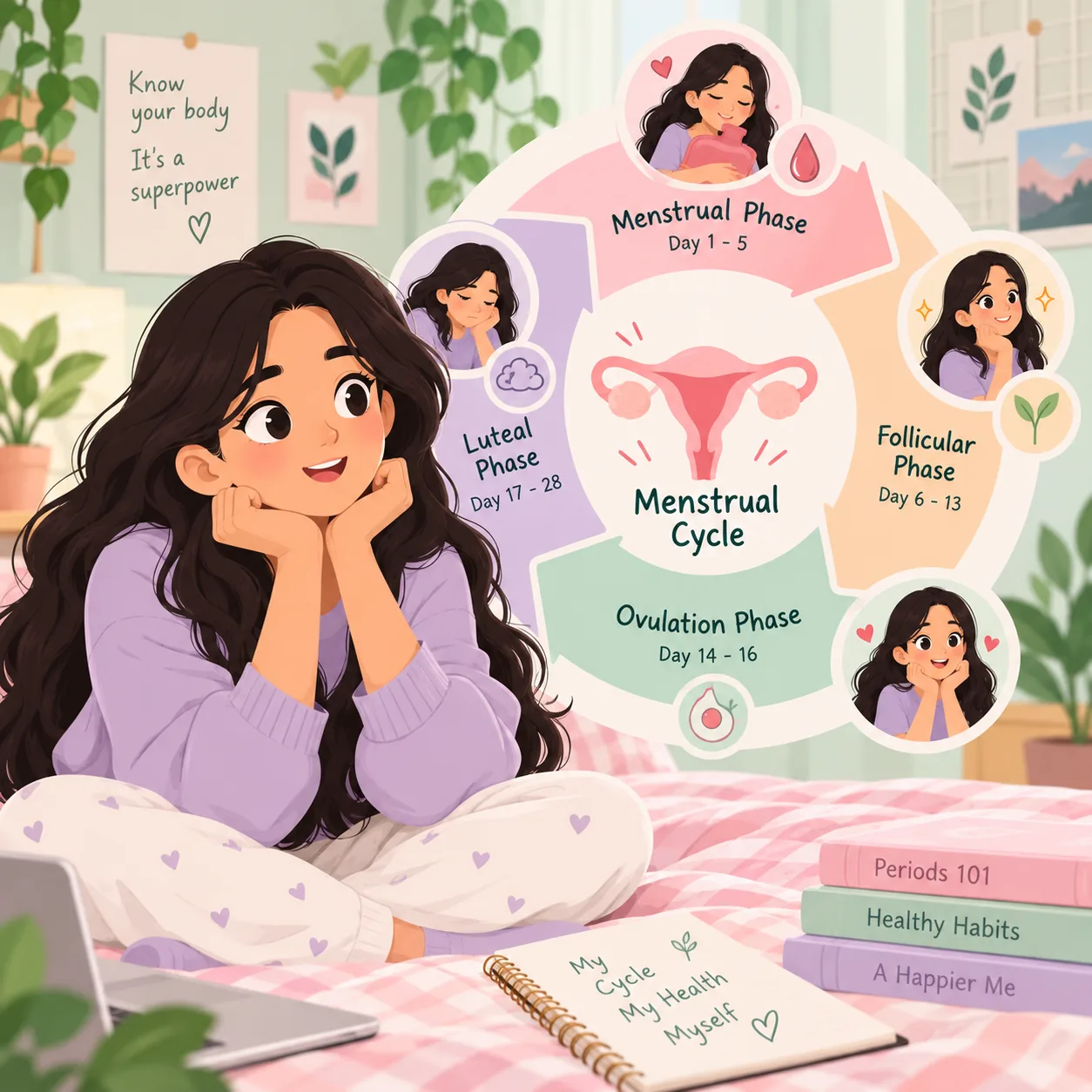
Key takeaways
- The menstrual cycle is your body’s monthly routine of preparing for a possible pregnancy.
- Count from day 1 of one period to the day before the next one starts.
- Cycles of about 21 to 35 days are normal for adults; teenagers’ can range from 21 to 45 days.
- Tracking your cycle helps you plan ahead and spot changes worth checking with a doctor.
1. The cycle in simple words
Each month, two hormones called estrogen and progesterone help your body prepare for a possible pregnancy. The lining of your uterus thickens, and one of your ovaries releases an egg.
If the egg is not fertilised, hormone levels drop and the lining is no longer needed. Your body sheds it through the vagina — that is your period. Then the whole process starts again.
So a period is not the end of something; it is the start of a new cycle.
2. How to count your cycle
Day 1 is the first day of real bleeding (not just spotting). Your cycle runs until the day before your next period starts.
For example, if your period started on 1 March and the next one started on 29 March, your cycle was 28 days long.
- Step 1Note the first day of bleeding: that is day 1
- Step 2Keep counting each day until your next period
- Step 3The day before it starts is the last day of the cycle
- Step 4Track 3 or more cycles to see your pattern
3. What is a “normal” cycle?
There is no single normal. 28 days is only an average, not a rule.
- Adults: cycles usually come every 21 to 35 days.
- Teenagers: in the first few years after periods start, 21 to 45 days is normal.
- A period itself usually lasts 2 to 7 days, often around 5.
- Your cycle can vary by a few days from month to month — that is normal too.
- The heaviest bleeding is usually in the first 2 days.
4. Things that can change your cycle
Your cycle is sensitive to what is going on in your life. These can make a period come early, late or be skipped:
- Stress, exams or big life changes.
- Illness, travel or changes in sleep.
- Big changes in weight, very intense exercise or not eating enough.
- Hormonal contraception and some medicines.
- Conditions such as PCOS (polycystic ovary syndrome) or thyroid problems.
- Pregnancy — if there is any chance you could be pregnant, take a test.
5. Why it is worth tracking
Doctors call the menstrual cycle a “vital sign”, like your pulse or blood pressure, because changes in it can be an early clue to other health issues.
Knowing your usual pattern helps you plan for trips, exams and sport, keep pads ready, and notice when something changes.
Cycle predictions in apps are estimates based on what you log. They are not a method of contraception.
6. When to see a doctor
- Your cycles are regularly shorter than 21 days or longer than 35 days (45 days for teenagers).
- You miss 3 periods in a row and you are not pregnant.
- You bleed between periods or after sex.
- Your periods suddenly become very different — much heavier, longer or more painful.
- Your period lasts more than 7 days.
7. FAQs
Sources & further reading
- PeriodsNHS (UK National Health Service)
- Your menstrual cycleOffice on Women’s Health, U.S. Department of Health and Human Services
- Menstruation in girls and adolescents: using the menstrual cycle as a vital signAmerican College of Obstetricians and Gynecologists (ACOG)
- Menstrual cycle: phases and hormonesCleveland Clinic
This article is general information, not medical advice. For diagnosis or treatment, please speak to a qualified healthcare professional. In an emergency, call 112.