




Period Pain
Why do period cramps happen?
Understand why period pain happens, what is normal and what isn’t, and simple, proven ways to manage cramps during your period.
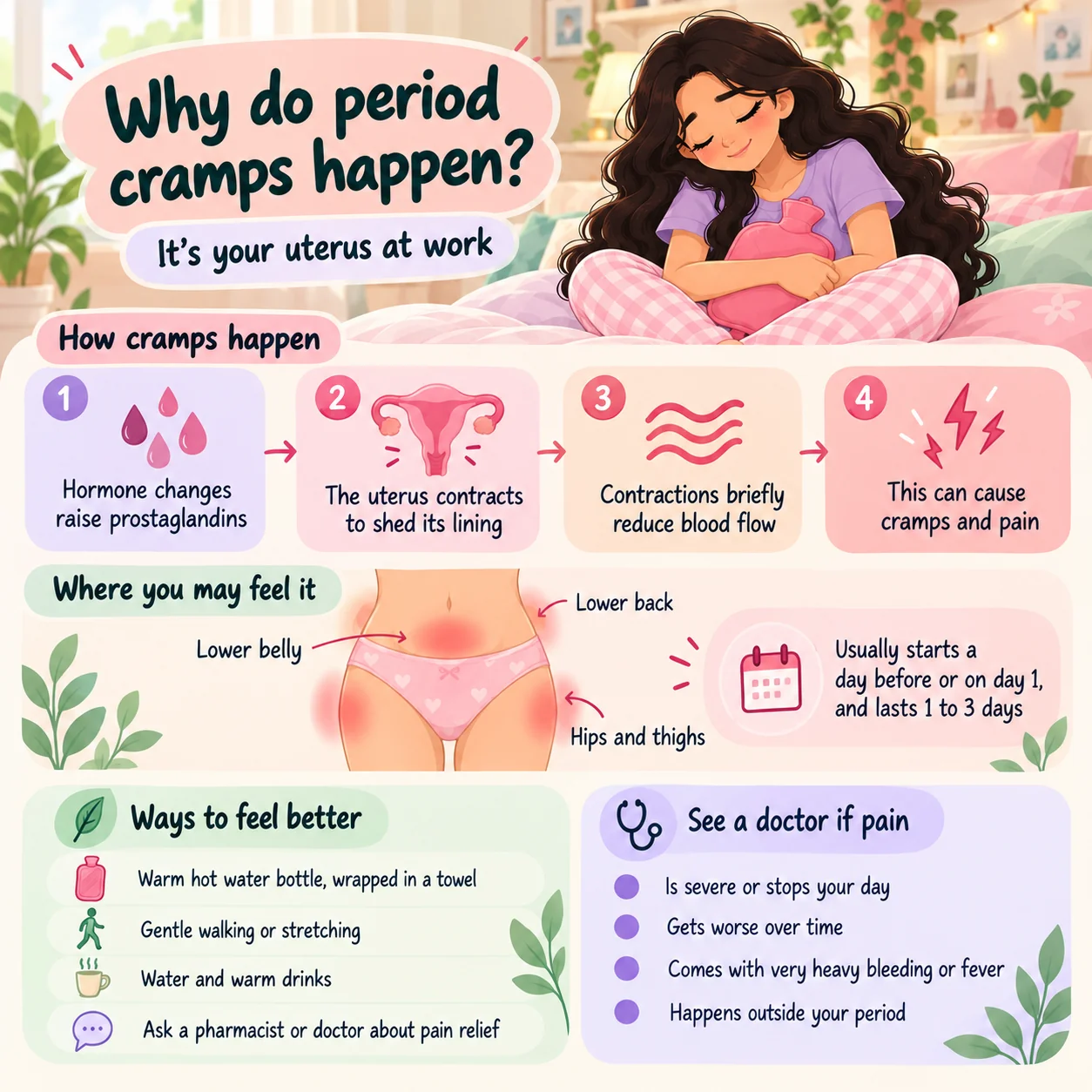
Key takeaways
- Cramps happen when your uterus tightens to shed its lining, driven by chemicals called prostaglandins.
- They usually start a day or two before or on day 1, and ease within 2 to 3 days.
- Heat, gentle movement and rest help; ask a pharmacist or doctor about pain relief.
- Severe pain, or pain that is getting worse, is not something to just put up with — see a doctor.
1. What are period cramps?
Period cramps (doctors call them dysmenorrhea) are a common pain in the lower tummy before or during your period. They can range from mild discomfort to strong, throbbing pain, and may spread to your lower back, hips and thighs.
They are very common: more than half of people who have periods get some pain, and for a smaller number it is strong enough to stop daily activities.
2. Why do period cramps happen?
During your period, the muscles of your uterus tighten (contract) to help shed its lining. These contractions are caused by hormone-like substances called prostaglandins.
The higher your prostaglandin levels, the stronger the contractions — and the more painful the cramps. Strong contractions can also briefly squeeze the blood vessels around the uterus, cutting its oxygen supply, which adds to the pain.
- Step 1Hormone changes increase prostaglandins
- Step 2The uterus contracts to shed its lining
- Step 3Contractions briefly reduce blood flow
- Step 4This can cause cramps and pain
3. What does period pain feel like?
Period pain can feel different for everyone: a dull, constant ache, sharp spasms or a throbbing sensation in the lower tummy. Some people also get backache, leg pain, nausea, loose stools, headaches or feel faint.
Pain usually starts 1 to 2 days before or on the first day of your period, is strongest in the first day or so, and eases within 2 to 3 days.
4. Two kinds of period pain
Doctors talk about two kinds of period pain:
- Primary dysmenorrhea: the common cramps caused by prostaglandins, with no underlying condition. It often starts in the teenage years and may ease with age or after having a baby.
- Secondary dysmenorrhea: pain caused by a condition such as endometriosis, adenomyosis, fibroids or pelvic infection. It often starts later in life, begins earlier in the cycle and lasts longer.
5. How to manage period cramps
Heat and exercise are recommended as first steps for easing cramps without medicine:
- Heat: rest a hot water bottle (warm, not boiling, wrapped in a towel) or heat pad on your lower tummy, or take a warm bath or shower.
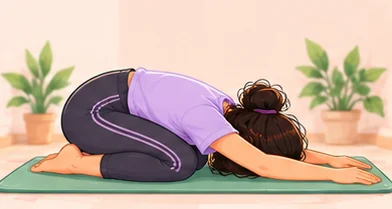
- Gentle movement: walking, yoga, stretching or cycling releases endorphins, your body’s natural painkillers.
- Massage: gently rub your lower tummy and back in small circles.
- Rest and sleep: tiredness can make pain feel worse.
- Drink water and warm drinks like ginger or jeera water.
- Avoid smoking, and limit caffeine and alcohol, which can make cramps worse.
6. Pain relief
Over-the-counter pain relief, such as ibuprofen or paracetamol, can help. Anti-inflammatory medicines like ibuprofen work by lowering prostaglandin levels. Not everyone can take them — for example, some people with asthma or stomach problems — so ask a pharmacist or doctor which is right for you and always follow the instructions on the pack.
If over-the-counter options don’t help, a doctor can suggest other treatments, including some types of hormonal contraception.
7. When to see a doctor
- Pain is severe or stops you going to school, college or work.
- Your periods become more painful, heavier or irregular over time.
- Pain-relief medicines and heat don’t help.
- You have pain outside your period, or pain during sex or when going to the toilet.
- Pain comes with fever, unusual discharge or bleeding between periods.
Conditions such as endometriosis can take years to diagnose. If your pain worries you, keep asking — you deserve answers.
8. FAQs
Sources & further reading
This article is general information, not medical advice. For diagnosis or treatment, please speak to a qualified healthcare professional. In an emergency, call 112.