


First Period
How to prepare for your first period
A practical checklist so you feel calm and ready — what to pack, how to practise with a pad, and what to do if your period surprises you.
Key takeaways
- A small period kit in your bag means you’re ready wherever your first period starts.
- Practising with a pad at home takes away the worry of using one for the first time.
- If you’re caught without a pad, folded toilet paper works until you can get one.
- Decide in advance who you would ask for help at school — asking is completely normal.
1. Why getting ready helps
Nobody can tell you the exact day your first period will start, so the easiest way to feel calm is to be ready before it happens. A few simple preparations mean that whenever it comes — at home, at school or while you’re out — you’ll know exactly what to do.
Getting ready is a good idea once you notice the early signs of puberty, such as breast development or white discharge in your underwear.
2. Make a small period kit
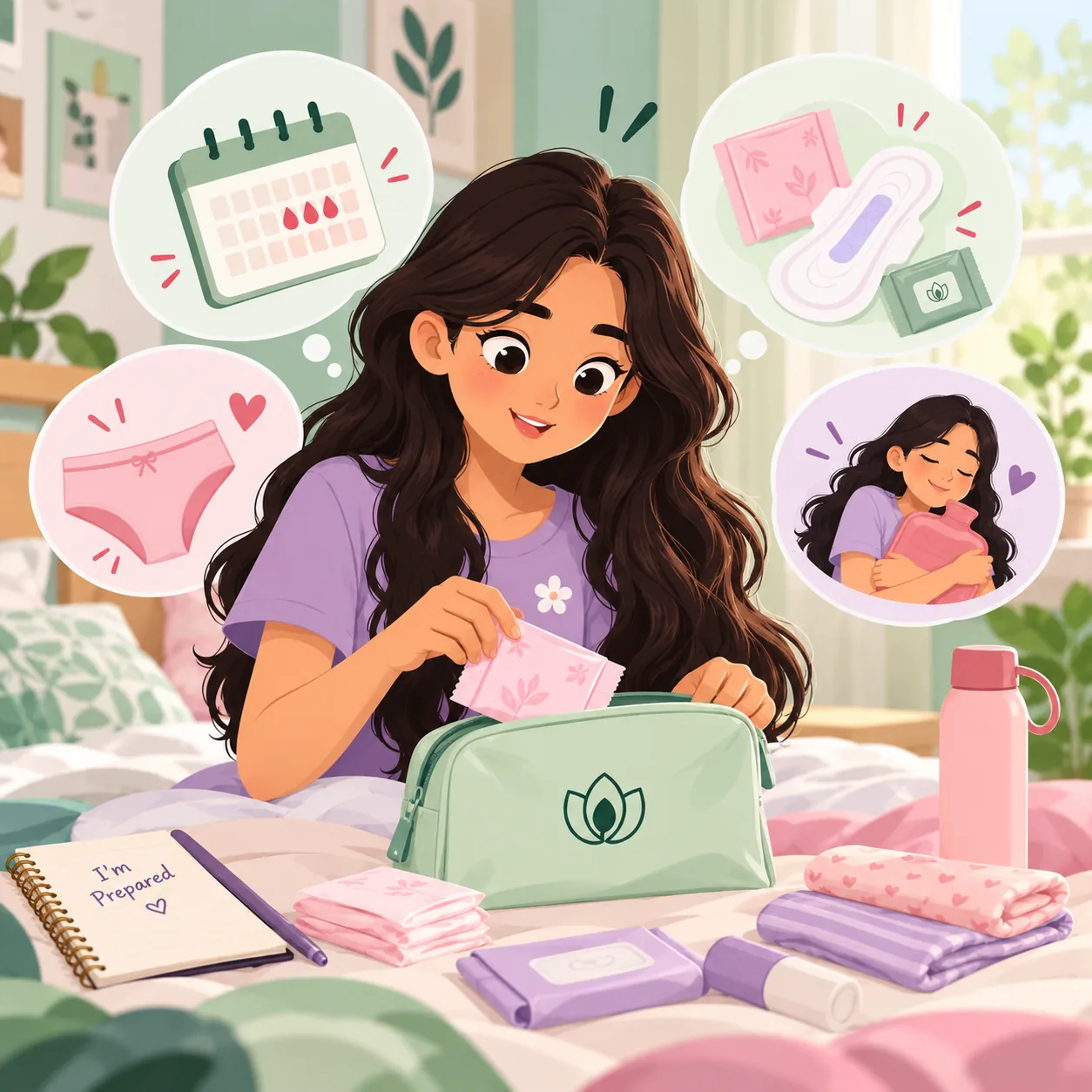
Keep a small pouch in your school bag so you are never caught out. Here’s what to put in it:
- 3 or 4 pads — a shorter size such as PIAX VERA (240mm) suits light first periods. Add one longer pad in case your flow is heavier.
- A spare pair of clean underwear.
- A small pack of tissues or wipes.
- A small zip pouch or paper bag for wrapping used pads if there is no bin nearby.
- Optional: a small hand sanitiser and a dark-coloured spare top or shorts.
Check your kit every month and refill it after you use something, so it’s always ready.
3. Practise using a pad at home
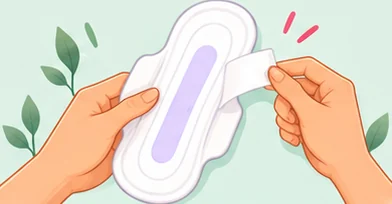
Opening and placing a pad for the first time can feel strange, so try it at home first when there’s no rush. Sit on the toilet with your underwear around your knees, then:
- Step 1Wash your hands and unwrap the pad
- Step 2Peel off the backing and stick it to the centre of your underwear
- Step 3Fold the wings around the sides and press them down
- Step 4Pull up your underwear and check it feels comfortable
4. Know who you can talk to
Many girls feel shy talking about periods, but the people around you will want to help. Before your period starts, think about who you would go to:
- At home: your mother, an older sister, aunt or another woman you trust.
- At school: a teacher you like, the school nurse or counsellor, or a close friend.
- Many schools keep spare pads in the office or sick room — find out where.
If talking feels hard, you can simply say “I need a pad” or show someone this article.
5. If your period surprises you
If your period starts and you don’t have a pad, don’t worry — this happens to almost everyone at some point.
- Fold toilet paper or tissue into a thick strip and place it in your underwear as a temporary pad.
- Ask a teacher, the nurse or a friend for a pad.
- If blood has stained your clothes, tie a jumper or jacket around your waist until you can change.
- Cold water works best for washing out blood stains later — hot water can set them.
6. Look after yourself
Your first periods are also a good time to start simple habits: change your pad every 4 to 6 hours, wash the outside of your genital area with plain water, drink enough water and get enough sleep. A warm hot water bottle can ease any cramps.
7. FAQs
Sources & further reading
This article is general information, not medical advice. For diagnosis or treatment, please speak to a qualified healthcare professional. In an emergency, call 112.