




Hygiene
Menstrual hygiene: a complete guide
Simple, practical steps for staying clean, fresh and comfortable during your period — what to do, what to avoid, and how to manage on the go.
Key takeaways
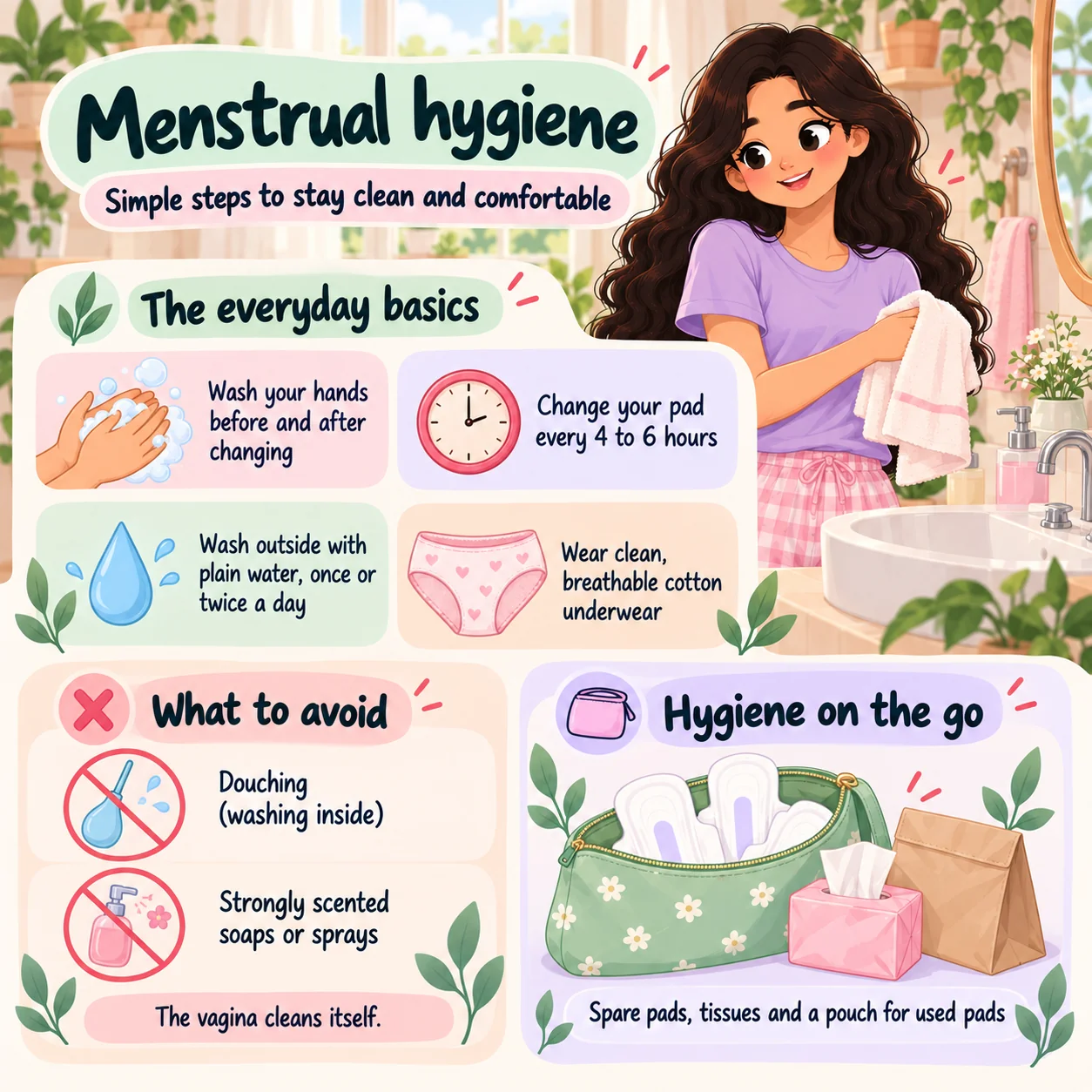
- Wash your hands before and after changing, and change your pad every 4 to 6 hours.
- Wash only the outside with plain water — the vagina cleans itself.
- Avoid douching and scented soaps, sprays or wipes, which can cause irritation.
- Carry a small kit so you can stay fresh wherever you are.
1. Why menstrual hygiene matters
Good menstrual hygiene helps you feel fresh and comfortable, and lowers the chance of rashes, irritation and infections. The World Health Organization recognises menstrual health as part of everyone’s overall health and wellbeing.
The good news is that it is simple. You don’t need special products — just clean hands, regular changes and a gentle approach.
2. The everyday basics
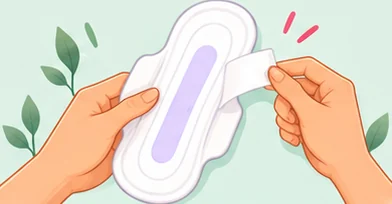
- Wash your hands with soap before and after changing a pad.
- Change your pad every 4 to 6 hours, even on light days.
- Wash the outer genital area (the vulva) with plain water once or twice a day.
- Wipe from front to back after using the toilet.
- Pat the area dry gently with a clean towel.
- Wear clean, breathable cotton underwear and change it daily, or sooner if it gets stained.
3. How to wash
Use plain, warm water on the outside only — the folds of skin around the vagina (the vulva). Gently part the folds and rinse, then pat dry.
You don’t need soap there. If you want to use one, choose a mild, unscented one on the outer skin only, and rinse well.
4. What to avoid
The vagina cleans itself naturally by making discharge, which washes away blood and other fluids. Washing inside can upset its natural balance of good bacteria and lead to infections.
- Douching (washing or spraying water or liquids inside the vagina).
- Strongly scented soaps, shower gels, bubble baths or vaginal washes.
- Perfumed sprays, powders or wipes on the genital area.
- Wearing the same pad for many hours.
- Tight, non-breathable underwear for long periods.
5. Hygiene on the go
Carry a small kit so you can change wherever you are:
- Spare pads in a pouch.
- Tissues or wipes (unscented).
- A small hand sanitiser for when soap and water aren’t available.
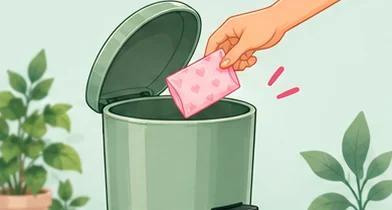
- A paper bag or pouch for wrapping used pads.
- A spare pair of underwear.
6. Signs to get checked
See a doctor if you notice:
- Itching, burning or soreness that doesn’t go away.
- Discharge that changes colour (green, grey or yellow), becomes thick like cottage cheese, or has a strong or fishy smell.
- A rash or sores around the genital area.
- Pain when you pee.
7. FAQs
Sources & further reading
This article is general information, not medical advice. For diagnosis or treatment, please speak to a qualified healthcare professional. In an emergency, call 112.