




PMS & Symptoms
Mood changes before your period: why they happen
Why your mood can follow your cycle, the role of hormones and serotonin, small things that genuinely help, and when to reach out.
Key takeaways
- Hormones rise and fall through your cycle, and the drop before a period can affect mood.
- These hormones influence serotonin, a brain chemical that helps regulate mood.
- Movement, daylight, regular meals, sleep and kindness to yourself all help.
- If low mood lasts or feels overwhelming, reach out — support is available.
1. Why mood can change
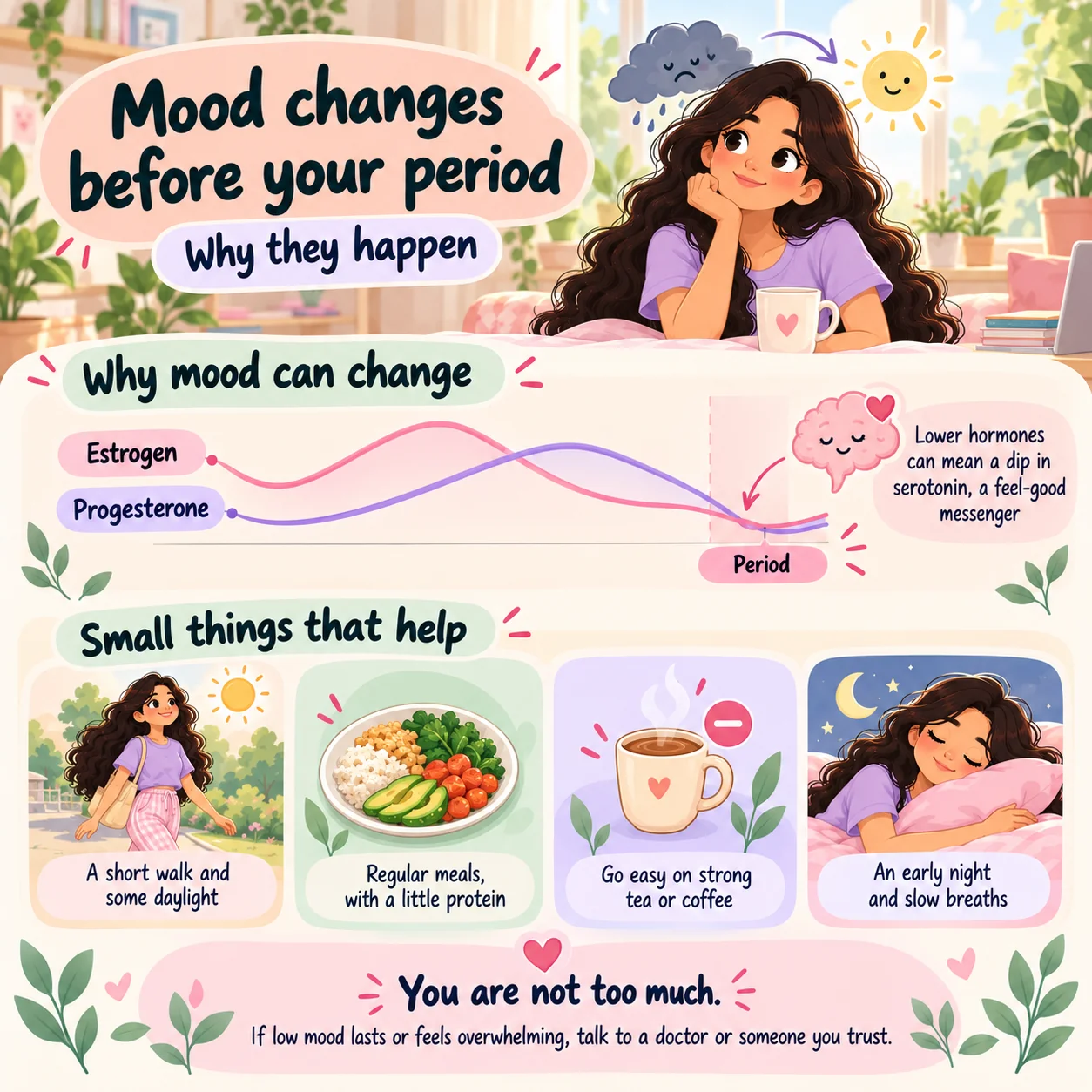
Estrogen and progesterone rise and fall through your cycle. In the week or two before a period, both drop.
Estrogen helps support serotonin, a feel-good messenger in the brain that helps regulate mood, sleep and appetite. When hormone levels fall, serotonin can dip too — which is why some people feel low, irritable or anxious before a period.
Some people are simply more sensitive to these hormone changes than others. It isn’t a weakness or something you are imagining.
2. What it can feel like
- Feeling irritable, snappy or impatient.
- Feeling sad, tearful or more sensitive.
- Feeling anxious, tense or on edge.
- Low energy or motivation.
- Finding it harder to concentrate.
- Feeling better once your period starts.
3. Small things that help
- A short walk and some daylight — movement and sunlight can lift your mood.
- Regular meals; pairing sweets with a little protein keeps energy steadier.
- Going easy on very strong tea or coffee if they leave you jittery.
- An early night — tiredness makes everything feel harder.
- Slow breathing, stretching or a few minutes of quiet time.
- Talking to a friend or family member about how you feel.
4. Plan around your cycle
Tracking your mood alongside your cycle for a few months can show a pattern. Once you know when your harder days tend to come, you can plan around them — for example, avoiding big decisions or busy plans, and building in extra rest.
Logging mood in the PIAX app next to your period dates makes patterns easier to see.
5. Helping the people around you understand
It can help to explain to family or close friends that your mood sometimes changes before your period. Simply saying “I’m having a harder few days” can make it easier for them to support you.
6. You are not too much
Feeling low or snappy before your period is common. But if low mood lasts, feels overwhelming, or affects your studies, work or relationships, please talk to a doctor. Severe premenstrual mood changes can be a sign of PMDD, which can be treated.
If you ever have thoughts of harming yourself, please reach out right away. In India you can call Tele-MANAS free, 24/7, on 14416, or 112 in an emergency.
7. FAQs
Sources & further reading
- Premenstrual syndrome (PMS)Office on Women’s Health, U.S. Department of Health and Human Services
- Premenstrual dysphoric disorder (PMDD)Cleveland Clinic
- PMS (premenstrual syndrome)NHS (UK National Health Service)
- Tele-MANAS: free 24/7 mental health helpline (14416)Ministry of Health and Family Welfare, Government of India
This article is general information, not medical advice. For diagnosis or treatment, please speak to a qualified healthcare professional. In an emergency, call 112.