




PMS & Symptoms
What is PMS?
The physical and emotional changes some people notice before a period, why they happen, what helps — and when to get support.
Key takeaways
- PMS is a set of physical and emotional changes in the days or weeks before a period.
- It is very common — most people notice at least some premenstrual symptoms.
- Exercise, sleep, balanced meals and less caffeine and salt can help.
- If symptoms affect your life, or low mood feels hard to cope with, talk to a doctor.
1. What PMS is
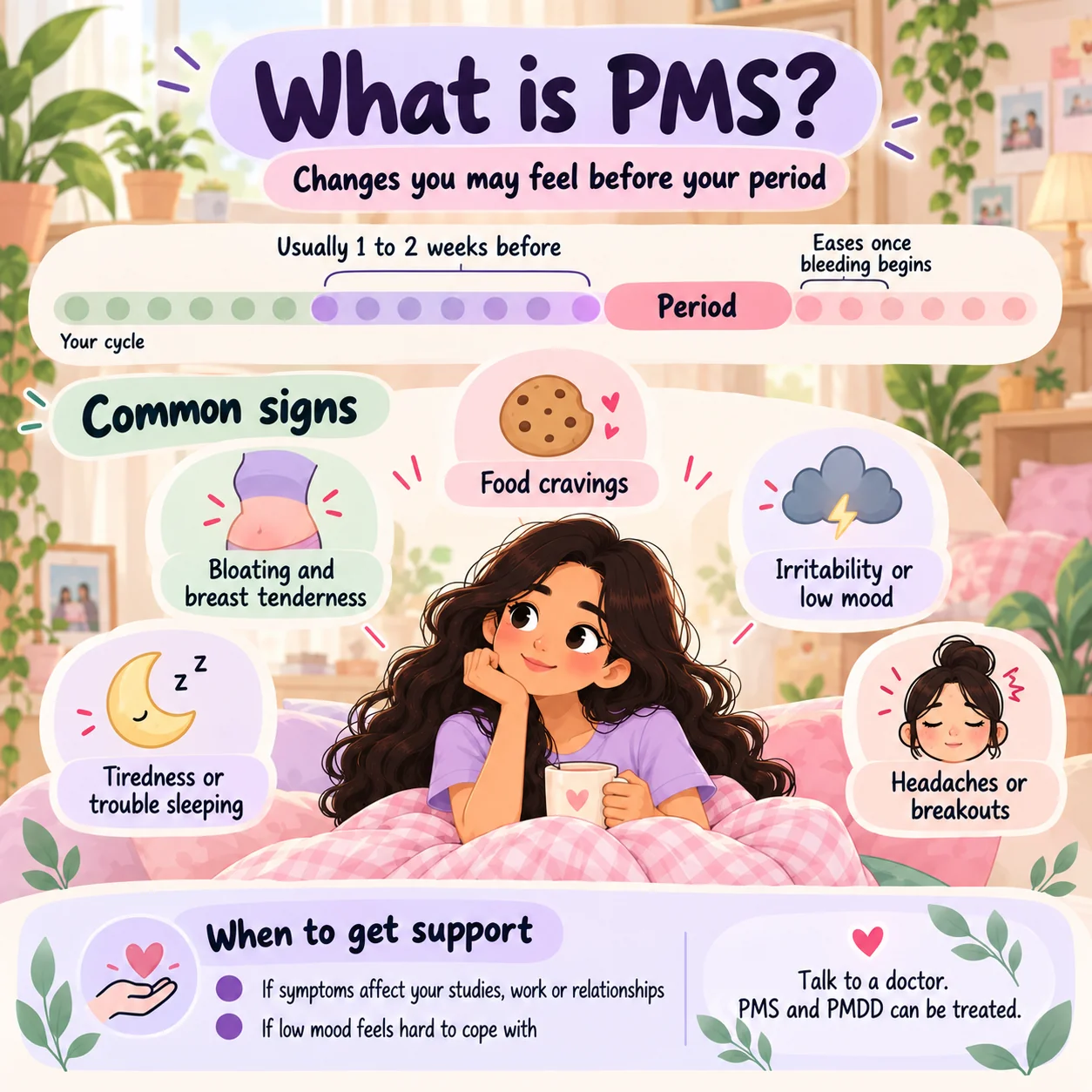
Premenstrual syndrome (PMS) is a set of physical and emotional changes that start in the days or weeks before a period, after ovulation. Symptoms usually ease within a few days once bleeding begins.
PMS is very common. Over 90% of people who have periods notice some premenstrual symptoms, and up to three in four experience PMS at some point.
2. Common signs
Symptoms vary a lot between people and even between cycles. Common ones include:
- Physical: bloating, tender or swollen breasts, headaches, backache, cramps, spots or greasy skin.
- Energy and sleep: tiredness, trouble sleeping or sleeping more than usual.
- Appetite: food cravings or changes in appetite.
- Mood: irritability, mood swings, feeling anxious, low or more emotional, or crying more easily.
- Focus: finding it harder to concentrate.
3. Why PMS happens
Doctors believe PMS is linked to the natural fall in estrogen and progesterone after ovulation. Some people seem more sensitive to these changes than others.
These hormones also affect serotonin, a brain chemical that helps regulate mood, sleep and appetite — which may explain why mood and cravings can change before a period.
4. Track your symptoms
Noting your symptoms each day for 2 to 3 cycles helps you see if they follow a pattern linked to your period. It also helps a doctor understand what you’re going through.
The PIAX app lets you log symptoms, mood and energy alongside your cycle, so patterns are easier to spot.
5. Things that can help
- Regular exercise, such as walking, cycling, dancing or yoga.
- Eating regular, balanced meals; cutting down on salt, sugar and caffeine in the two weeks before your period.
- Getting enough sleep — around 8 hours a night.
- Managing stress with yoga, meditation, journaling or time outdoors.
- Not smoking, and limiting alcohol.
- Pain relief for headaches or cramps — ask a pharmacist which suits you.
6. PMDD: a more severe form
Premenstrual dysphoric disorder (PMDD) is a severe form of PMS that affects fewer than 1 in 20 people who have periods. Its emotional symptoms — such as severe anxiety, anger, deep sadness or hopelessness — are much more intense and can seriously affect daily life and relationships.
PMDD is a recognised medical condition and can be treated, so please talk to a doctor if this sounds like you.
7. When to get support
Talk to a doctor if self-help doesn’t make a difference, or if symptoms affect your studies, work or relationships. Treatments can include talking therapies, hormonal options and other medicines.
If you ever have thoughts of harming yourself, please reach out right away. In India you can call Tele-MANAS free, 24/7, on 14416, or 112 in an emergency.
8. FAQs
Sources & further reading
- PMS (premenstrual syndrome)NHS (UK National Health Service)
- Premenstrual syndrome (PMS)Office on Women’s Health, U.S. Department of Health and Human Services
- Premenstrual dysphoric disorder (PMDD)Cleveland Clinic
- Tele-MANAS: free 24/7 mental health helpline (14416)Ministry of Health and Family Welfare, Government of India
This article is general information, not medical advice. For diagnosis or treatment, please speak to a qualified healthcare professional. In an emergency, call 112.